 Reviews


 Proudly American


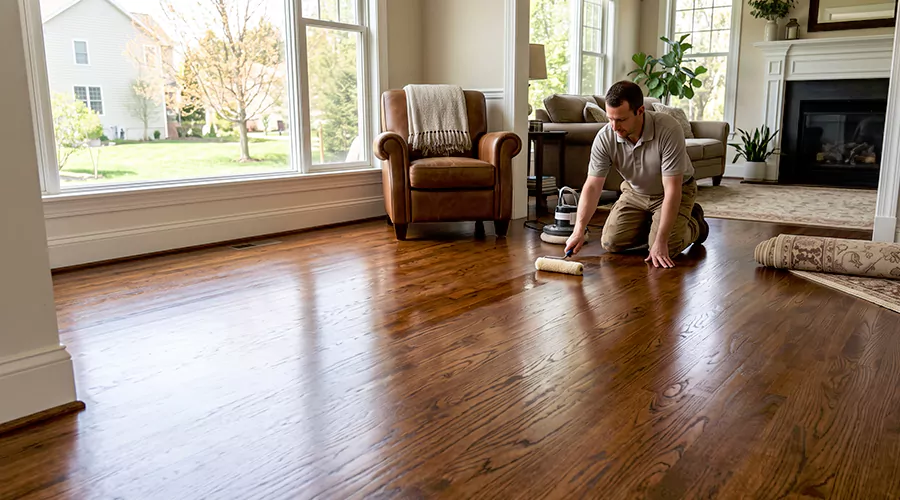
Timber floor restoration is the process of repairing and renewing an existing wood floor instead of replacing it. Work can range from repairing loose boards and correcting surface damage to full sanding followed by a new finish. Traditional wood floor refinishing commonly costs about $3 to $8 per square foot in 2026.
Restoration is broader than simply polishing the floor. The correct method depends on whether damage is limited to the finish or extends into the wood.
What Does Timber Floor Restoration Include?
Timber floor restoration starts with assessing the floor's condition before deciding how much work is needed. A lightly worn surface may need only a maintenance coat. Deep scratches or bare wood usually call for sanding and refinishing.
Typical work may include:
- Cleaning the existing floor
- Repairing loose boards
- Replacing isolated damaged sections
- Correcting minor gaps
- Sanding damaged finish
- Applying a new protective coating
Wood floor restoration should preserve as much sound original flooring as possible.
Is Restoration Different From Refinishing?
Yes. Refinishing is one possible part of restoration. Restoration may also include structural repairs or replacing damaged boards before the surface is refinished.
| Process | Main Purpose |
|---|---|
| Cleaning | Remove surface dirt |
| Maintenance coat | Refresh an intact finish |
| Refinishing | Sand and renew the finish |
| Repair | Correct damaged boards |
| Restoration | Combine repairs with finish renewal |
| Replacement | Install a new floor |
Hardwood floor resurfacing is often used to describe work that renews a worn surface without replacing the entire floor.
When Does a Timber Floor Need Restoration?
Water damage floor repair becomes necessary when normal cleaning no longer improves the floor or the finish has worn through in busy areas. Deep scratches and water stains can also show that the problem extends beyond routine maintenance.
Watch for:
- Bare wood in traffic areas.
- Gray discoloration.
- Deep scratches.
- Finish peeling.
- Loose floorboards.
- Small damaged sections.
- Persistent water staining.
- Uneven wear.
- Minor cupping after an old moisture event.
- Large areas that remain dull after cleaning.
Refinishing old hardwood floors can often correct decades of surface wear when the boards remain thick enough.
How Does the Restoration Process Work?
The process should move from structural problems to cosmetic work. There is little value in refinishing a floor while boards are still loose or moisture is active beneath them.
A typical sequence is:
- Inspect the flooring and subfloor.
- Check moisture conditions.
- Repair loose or damaged boards.
- Replace isolated unsalvageable pieces.
- Sand the surface when needed.
- Clean away sanding dust.
- Apply a compatible finish.
- Allow the coating to cure.
Timber floor restoration may take several days when a full sanding and finish system is required.
Can a Floor Be Restored Without Sanding?
Yes. A floor with an intact finish and only light surface wear may need a maintenance coat rather than full sanding. Screening or buffing commonly costs around $1 to $2.50 per square foot in 2026. This lighter treatment removes less material than complete sanding.
A maintenance coat is not suitable when:
- Bare wood is exposed.
- Deep scratches enter the wood.
- Water stains extend below the finish.
- The surface contains major unevenness.
- The old finish is failing extensively.
Full sanding becomes more practical once wear reaches the wood itself.
How Much Does Timber Floor Restoration Cost?
Full traditional refinishing generally costs about $3 to $8 per square foot in 2026. Many residential hardwood refinishing projects total around $1,100 to $2,700.
Repair needs can increase the final price.
| Restoration Work | Typical 2026 Cost |
|---|---|
| Screening or buffing | $1 to $2.50 per sq. ft. |
| Sanding | $0.50 to $3 per sq. ft. |
| Staining | $1 to $3 per sq. ft. |
| Finish application | $1 to $2 per sq. ft. |
| Full traditional refinishing | $3 to $8 per sq. ft. |
| Localized floor repairs | Often $200 to $600+ |
The condition of the floor matters more than age alone.
Can Water-Damaged Timber Floors Be Restored?
Some can. Wood that becomes wet may swell or cup as moisture levels rise. The floor needs time to dry before sanding because its shape can continue changing. Restore water damaged wood floor areas only after the moisture source is corrected. Minor cupping may improve during controlled drying. Severe buckling or subfloor damage can require board replacement. Never sand a wet wood floor simply to make cupped edges level. The surface can become uneven once the flooring dries.
Can Engineered Timber Floors Be Restored?
Some engineered floors can be refinished, but their usable top layer is much thinner than solid wood. The manufacturer specifications or remaining wear-layer thickness should be checked first. Refinishing engineered wood floors is less forgiving because sanding too deeply can expose the layer beneath the hardwood veneer. A light maintenance coat may be a better option when the finish is worn but the wood layer is thin.
What Can You Check Yourself?
A simple inspection can help determine whether you need cleaning or full restoration.
Check the floor under bright natural light:
- Look for areas of bare wood.
- Mark deep scratches.
- Check whether boards move.
- Look for cupping.
- Compare busy areas with protected sections.
- Check moisture where stains are present.
- Look for previous aggressive sanding.
If scratches disappear when the floor is dampened slightly with a cloth, the damage may be mainly in the finish. Do not leave water sitting on the wood.
When Should You Call a Professional?
Professional assessment becomes useful when the floor's remaining thickness is uncertain or structural repairs are needed.
Consider professional help when:
- Several boards are loose.
- Deep water damage is present.
- The subfloor may be affected.
- Engineered flooring has a thin wear layer.
- The floor has been sanded several times.
- Large sections are badly uneven.
- Historic flooring needs careful preservation.
Professional hardwood floor refinishing can remove very little wood while still correcting substantial finish wear when the floor allows it.
How Can You Reduce Future Restoration Needs?
Routine maintenance can delay another major sanding.
Use these habits:
- Vacuum regularly.
- Wipe spills immediately.
- Avoid steam mops.
- Use a wood-floor cleaner.
- Maintain indoor humidity around 30 to 50 percent.
- Add furniture pads.
- Consider a maintenance coat before bare wood appears.
A maintenance coat every few years can be less disruptive than waiting until the finish wears completely through.
Conclusion
Timber floor restoration repairs an existing wood floor before renewing its protective surface. Light wear may need only a maintenance coat, while deep scratches can require complete refinishing. Moisture damage should be corrected before sanding begins. Many sound timber floors can be restored for far less disruption than replacement. This week, check whether worn areas still have finish or have reached bare wood.
Frequently Asked Questions
Is timber floor restoration the same as sanding?
No. Sanding is one part of restoration when surface damage is deep enough to require it.
How long does timber floor restoration take?
Full refinishing commonly takes about 2 to 7 days. Repairs can extend the schedule.
Can very old timber floors be restored?
Often, yes. Age alone doesn't prevent restoration if the boards remain sound and thick enough.
Can scratched floors be restored without sanding?
Light finish scratches may respond to a maintenance coat. Deep scratches usually need more surface correction.
How often should wood floors be refinished?
There is no fixed schedule. Full refinishing is generally needed only when wear reaches the wood or deeper damage develops.
Is restoration cheaper than replacement?
Usually, when the existing floor remains structurally sound and requires mainly surface work.